
Pelvic floor dysfunction is incredibly common, but that doesn’t mean you have to live with leaking, pelvic pain, constipation, or discomfort during sex. Pelvic floor problems can affect women and men at any stage of life—and they’re often undertreated because many people assume their symptoms are simply something they have to live with.
Your pelvic floor is made up of several muscles, and like any other muscle group, it can be trained, relaxed, and coordinated with the rest of your body.
In this beginner’s guide, we’ll cover what pelvic floor physical therapy is, how to identify your pelvic floor muscles, beginner-friendly exercises, common mistakes, and when it’s time to see a pelvic floor physical therapist.
One important note: This article is for educational purposes and is not a substitute for an individualized evaluation. The best pelvic floor exercise program depends on what your muscles actually need!
What Is Pelvic Floor Physical Therapy?
Pelvic floor physical therapy is a specialized type of physical therapy that evaluates how pelvic floor muscles along with the entire body are functioning and teaches you how to improve their strength, mobility, coordination, and relaxation.
And this is where pelvic floor PT is different from simply doing Kegels.
Not every pelvic floor needs to be stronger.
Your pelvic floor muscles can be weak, but they can also be overly tight, painful, or poorly coordinated. Some people may need strengthening, while others need to learn how to relax their pelvic floor before strengthening it.
A pelvic floor physical therapist evaluates how your muscles are working rather than automatically prescribing Kegels. This individualized approach can help you address the underlying problem instead of simply treating the symptom.
Signs You Might Benefit From Pelvic Floor PT
You don't have to be pregnant or postpartum to benefit from pelvic floor physical therapy. People of all ages and activity levels can experience pelvic floor dysfunction.
You may benefit from an evaluation if you experience:
Urine leakage when coughing, sneezing, jumping, running, or exercising
A frequent or urgent need to urinate
Difficulty controlling bowel movements or accidental stool leakage
Chronic constipation or straining to have a bowel movement
Pelvic, hip, tailbone, or lower abdominal pain
Pain during or after sex
A feeling of heaviness, pressure, or bulging in the pelvis
Pelvic floor symptoms during pregnancy or postpartum recovery
Symptoms following prostate surgery
Difficulty returning to exercise after pregnancy, surgery, or injury
If any of these sound familiar, we can help. You don't have to wait until your symptoms become severe before getting the help you deserve!
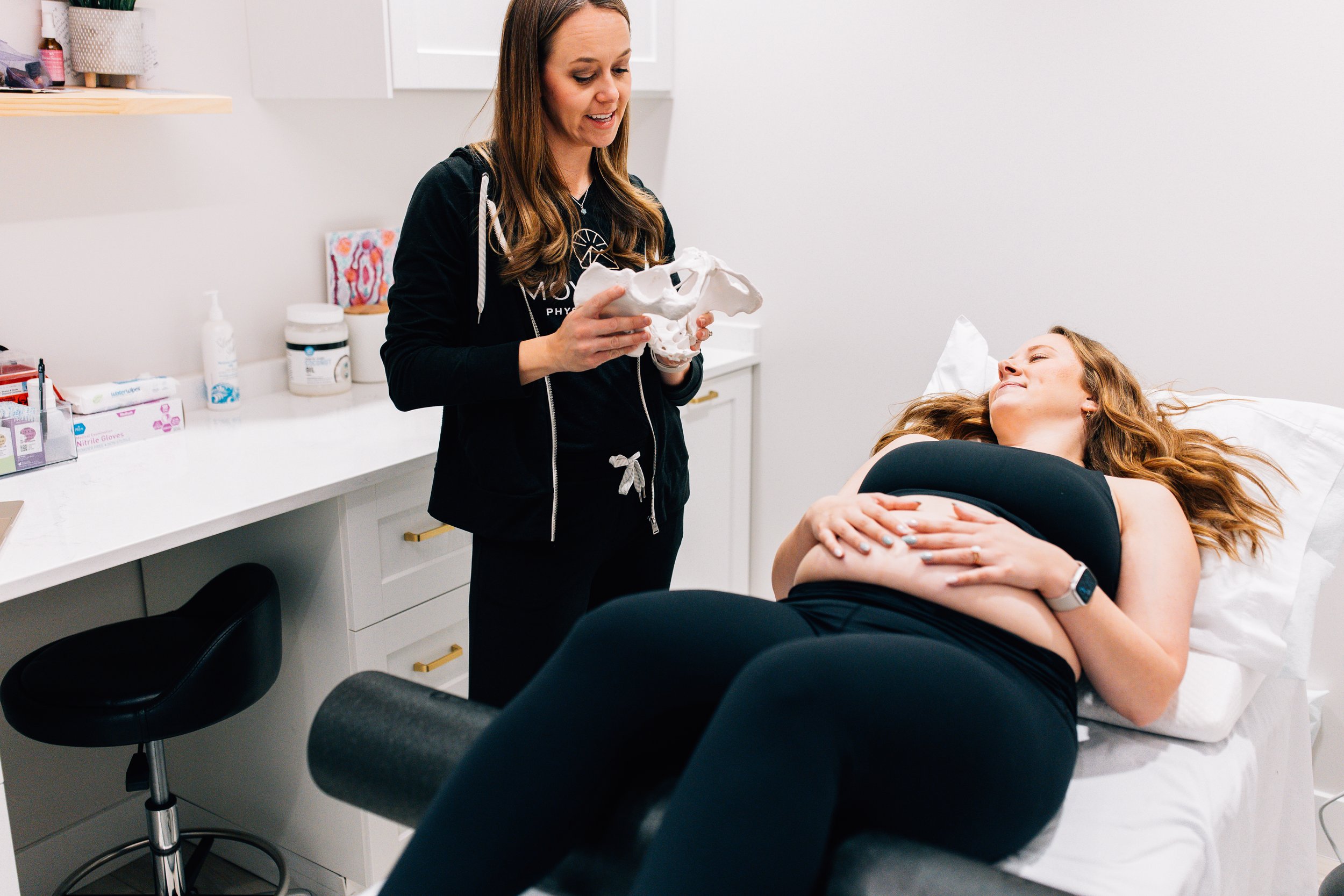
Before You Start: How to Find Your Pelvic Floor Muscles
Before performing pelvic floor exercises, it helps to understand what you're trying to actually do! (Hint: you want to make sure you know if your muscles are tight, weak, or a combination of both.)
One way to identify your pelvic floor muscles is to briefly notice the muscles you would use to stop the flow of urine or hold in a bowel movement. This is an identification exercise only—not something you should repeatedly practice while urinating. Regularly stopping your urine stream can interfere with normal bladder emptying. You can also feel these muscles by placing your hand over the vulva, right and inside your sit bones.
First, take a big inhale breath into the diaphragm, allowing the lower ribs to expand on that inhale. On the exhale, imagine picking up a marble into your anus to think about lifting the deep pelvic floor muscles.
You should not feel like you're pushing or bearing down.
Another common mistake is allowing other muscles to take over. Your glutes, inner thighs, and abdominal muscles may naturally want to help. While these muscles work together with your pelvic floor, they shouldn't be doing all the work.
Diaphragm breathing is the KEY to making sure the entire system is working properly.
If you have difficulty feeling your pelvic floor muscles—or if contracting them causes pain—that's a great reason to work with a pelvic floor physical therapist.
The exercises below are commonly used to help improve pelvic floor strength, coordination, mobility, and relaxation. However, more is not always better. Your ideal exercises, sets, and repetitions should be based on your individual symptoms and evaluation.
Sample Beginner Pelvic Floor PT Exercises
The exercises below are commonly used to help improve pelvic floor strength, coordination, mobility, and relaxation.
If you're new to pelvic floor exercises, start simple. Here's an example of what a beginner daily routine might look like:
Exercise Sets/Reps
Diaphragmatic breathing 5-10 breaths
Child's Pose 3× 30-60 seconds
Bridges with Hip Dips 3×10 reps
Bird dog 20-30 reps
Adductor Rocking 20-30 reps
Watch this video HERE to get a visual demonstration of these exercises!
Notice how we didn’t include KEGELS to start?
Pelvic Floor Exercises do not equal Kegels.
Almost everyone needs length before they can build up strength. Doing too many Kegels is going to make the pelvic floor even more tight and difficult to coordinate. Most often, people demonstrate weak core and glut muscles. With less stability on the outside of the pelvis, the pelvic floor is going to work overtime, causing pain and tension down there. We need length and strength to all muscles attached to the pelvis for optimal movement, support, and stability.

Mistakes to Avoid With Pelvic Floor Exercises
1. Doing too many Kegels
If your pelvic floor is already tight, doing hundreds of contractions every day isn't necessarily going to help. In some cases, it may increase tension and symptoms.
2. Holding your breath
Your pelvic floor works with your diaphragm and abdominal muscles to manage pressure. Holding your breath can make it harder to coordinate these muscles properly.
3. Bearing down instead of lifting
You should not feel your pelvic floor bear down during these exercises. The pelvic floor works as a system with the rest of the body to provide a lift instead.
4. Expecting overnight results
Like any other area of the body, improving strength, coordination, mobility, and endurance takes time. Consistency is more important than doing as many repetitions as possible.
5. Assuming Kegels are the answer to everything
This is one of the biggest misconceptions about pelvic floor therapy. Your symptoms may be caused by weakness, tension, poor coordination, or a combination of factors.
6. Skipping an evaluation
You can find hundreds of pelvic floor exercises online, but an exercise that helps one person may not be the right choice for another. An individualized evaluation can help you understand what your body actually needs.
The Bottom Line
Pelvic floor exercises can be an excellent tool for improving strength, coordination, mobility, and control—but the right exercise depends on what your pelvic floor actually needs.
If your muscles are weak, strengthening may help. If they're tight, learning to relax may be more important. And if they're struggling to coordinate with the rest of your body, exercises that integrate breathing, your core, hips, and pelvic floor may be the missing piece.
You don't have to guess.
If you're experiencing pelvic floor symptoms that are affecting your workouts, relationships, daily life, or confidence, consider scheduling an evaluation with a pelvic floor physical therapist.
At Movement Physio & Wellness, we believe pelvic floor therapy is about much more than Kegels. Our goal is to help you understand your body, address the root of your symptoms, and get back to doing the things you love—whether that's running, lifting, hiking, skiing, snowboarding, or simply living your everyday life without fear of leaks or pain.
If you are ready to finally make real changes with lasting impact, you can reach out to us in a few ways!
Call/Text at (720) 500-7450
Book your appointment online HERE
We can’t wait to hear from you and help you achieve lasting results so you feel confident returning to your workouts and Colorado activities!
Peace, Love, and Happy Pelvic Floors,
