
Dry Needling
Do you have a muscle knot that just is not going away?
Have you tried stretching and the pain is still there?
You should try Dry Needling!
What is Dry Needling?
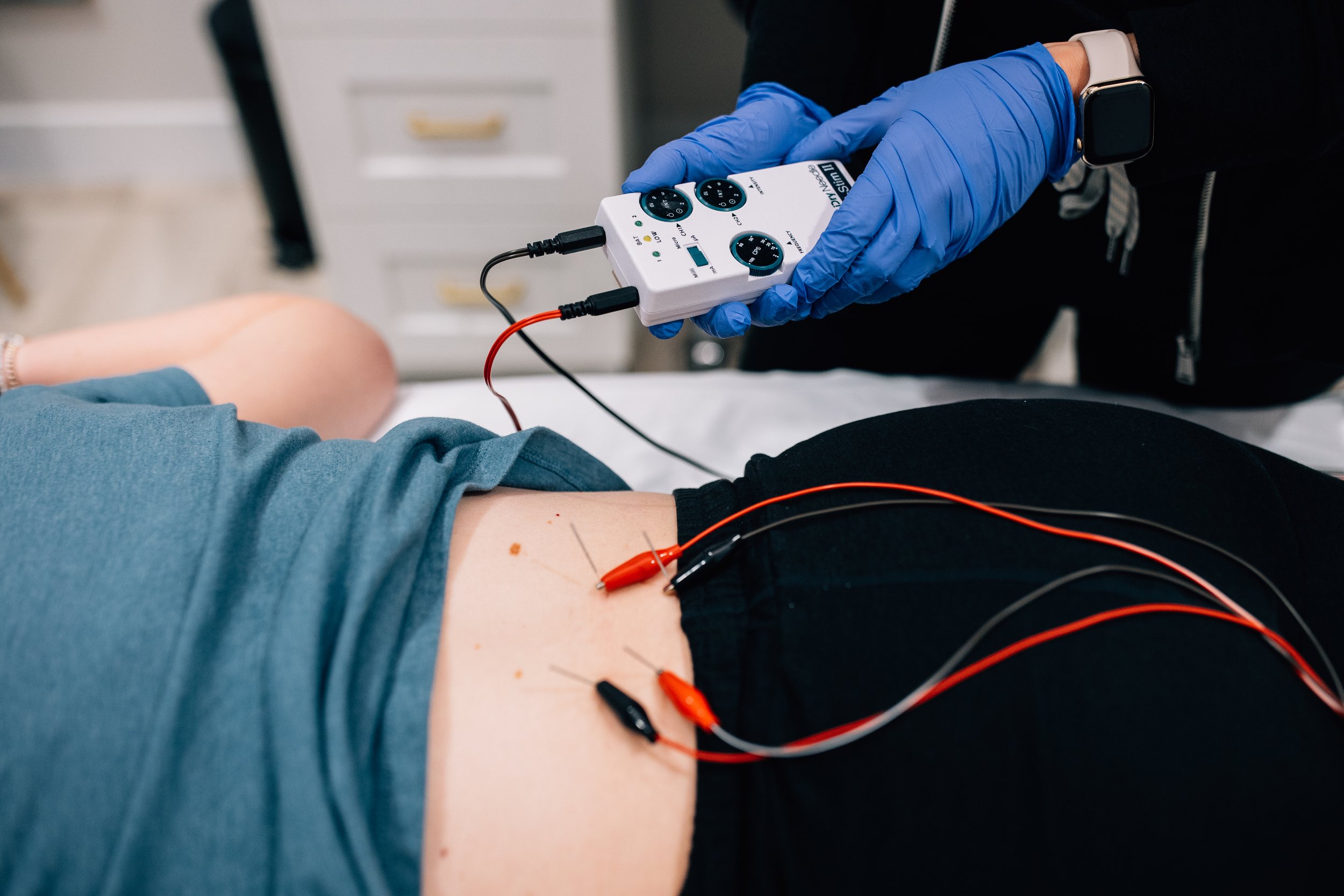
Dry Needling is one of our favorite tools for reducing pain, releasing tight muscles, and encouraging muscles to work properly again. Dry needling involves using tiny microfilament needles which we insert into a muscle belly that is tight, painful, or weak. The small needles are hooked up to electrical stimulation and delivers a current to the needle, which will twitch or tap based on the settings. The needles are similar to acupuncture needles and do not deliver medication.
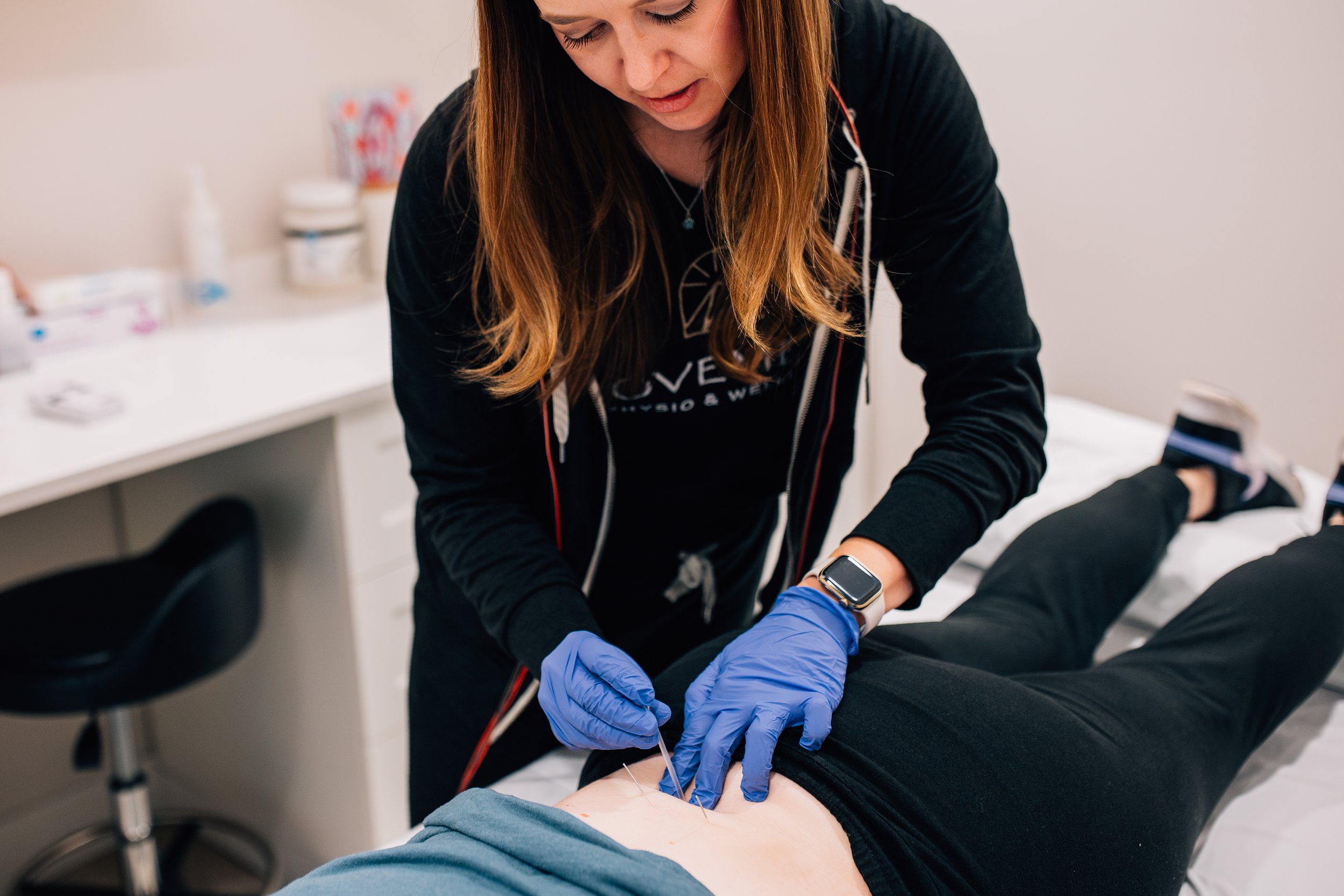
Common Conditions Treated Using Dry Needling
Back Pain
Neck Pain
Hip Pain
Shoulder and Neck Pain
Knee Pain
Weak Gluts
Sciatica
SI Joint Pain
Pelvic Pain
Bladder Leakage
Tight Pelvic Floor
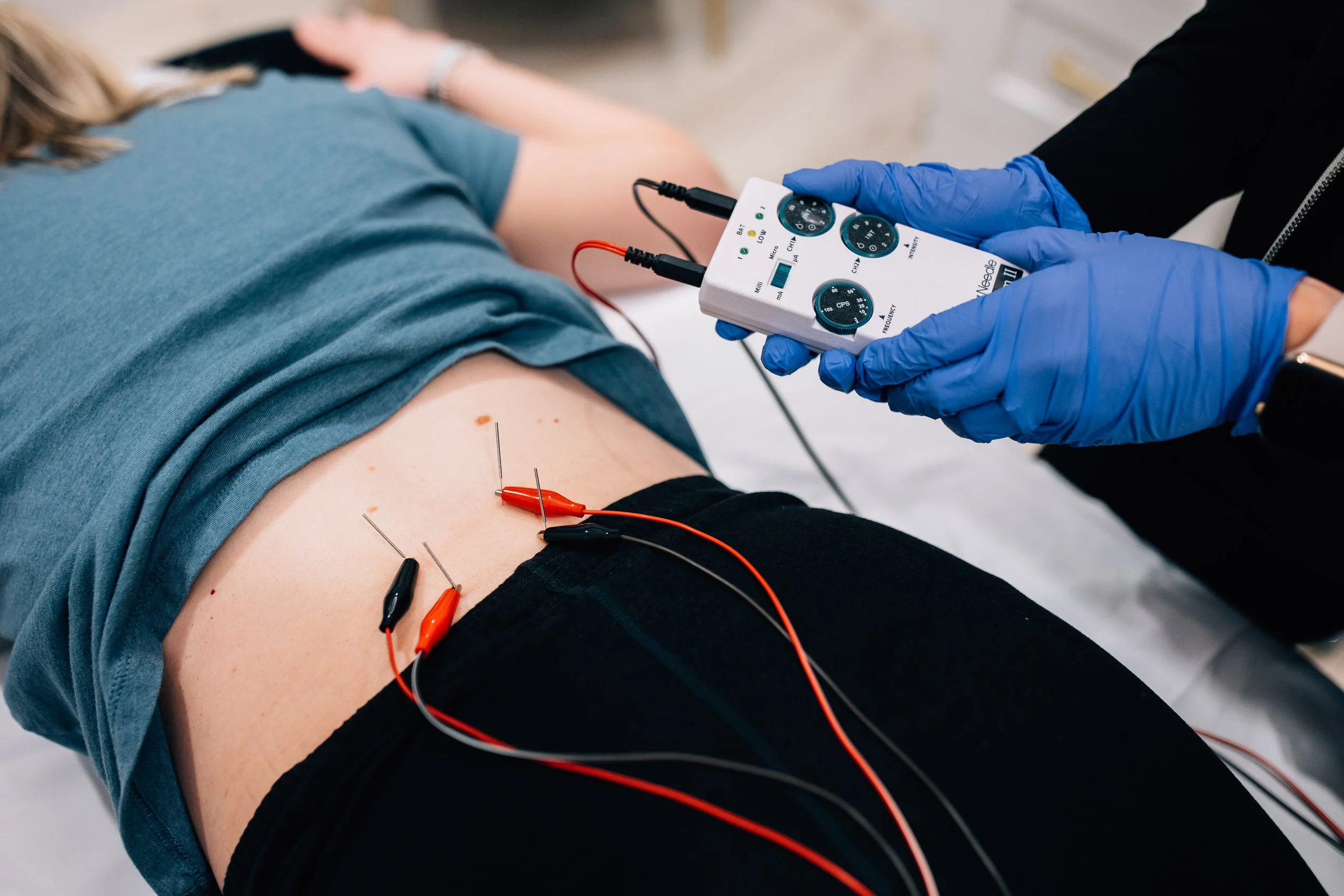
How does Dry Needling work?
We use dry needling directly on muscles that are in pain, need to be released, or are weak. The needle is inserted directly into the muscle that is contributing to the problem. This is different than acupuncture treatment, which is using traditional Chinese meridians to guide their treatment. The needle is really thin and stays in the muscle while we deliver electrical stimulation to the muscle. All muscles are connected to nerves and by stimulating these muscles and the nervous system at the same time, we can help reduce pain, improve blood flow for tissue healing, and restore movement!
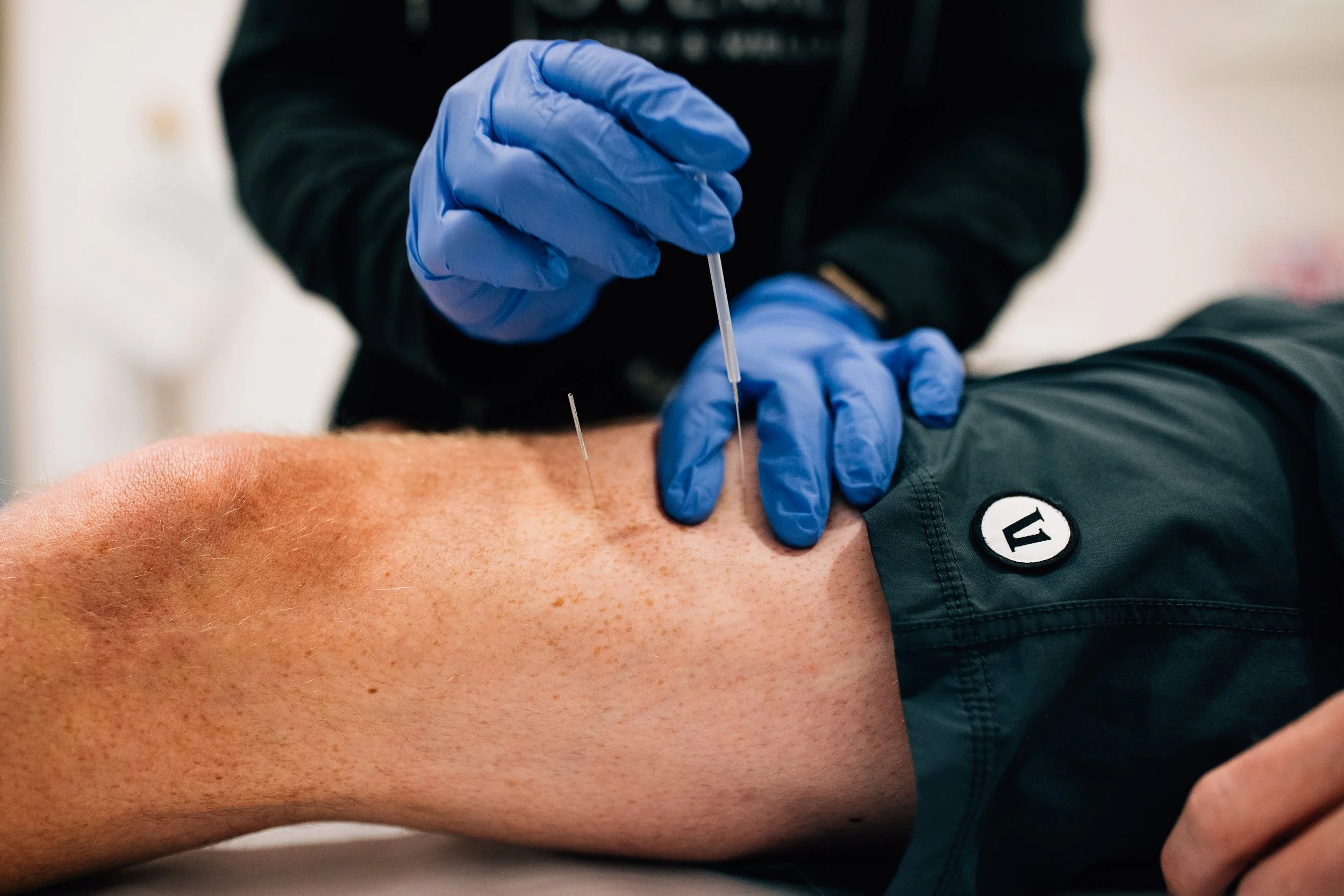
How Dry Needling Is Related to Pelvic Floor Therapy
Working with us for Pelvic Floor Therapy involves treating the whole body, including the muscles surrounding the pelvis, and not just the pelvic floor! Often we need to look at the gluts, back muscles, hips, abdominal wall, and thighs. We can dry needle all these areas if we find they are contributing to your pelvic floor issue. Our therapists will do a thorough exam, looking from your head to your feet to see if anything there is contributing to your pelvic floor symptoms. We even have extra certifications in dry needling the pelvic floor muscles directly! It’s quick and effective for releasing really painful or tight pelvic floor muscles.
Dry Needling can be helpful for these specific issues that are related to the pelvic floor:
Pelvic Pain with sitting, standing, or activity
Tight Pelvic Floor Muscles
Pregnancy Pelvic Girdle Pain
Postpartum Back Pain, Neck Pain, and Hip Pain
Overactive Bladder Symptoms
Incontinence of Bladder or Bowel
Tailbone Pain
Pelvic Pain from Endometriosis
Pelvic Pain related to PMOS (Formally known as PCOS)
Frequently Asked Questions
-
Pelvic floor physical therapy is a speciality physical therapy that is perfect for people who are struggling with conditions related to the pelvis or pelvic floor. Some of these common issues have to do with bladder leakage, bowel issues, or sexual dysfunction related to the muscles of the pelvic floor. We work on eliminating pain, stopping these embarrassing symptoms, and getting you back to activities and goals specific to you.
-
At Movement Physio and Wellness, we help adults struggling with bladder, bowel, and sexual dysfunction. We most typically see women during pregnancy, postpartum, or menopause. We also treat men struggling with pelvic floor problems like pelvic pain, urinary urgency, and constipation. We do not treat pediatrics but will see teenagers on a case by case basis.
-
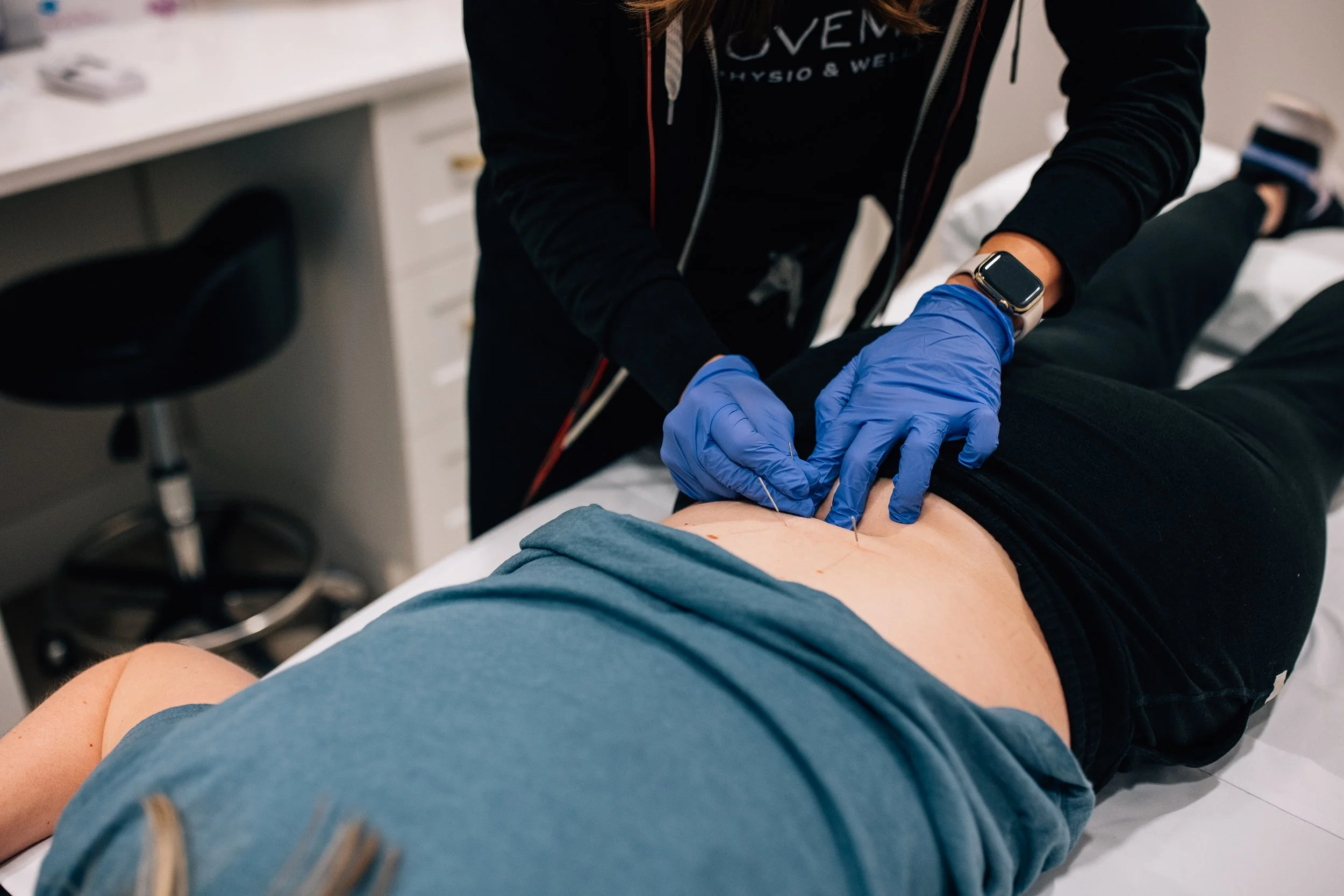
You might feel a small tap as the needle is inserted into the tissue. Once it rests in the tissue, we hook the needle up to electrical stimulation to deliver small, comfortable pulses to the muscle. We are typically looking for you to feel a tap or thumping sensation, like the muscles are contracting. It should be tolerable and not stabbing or sharp.
-
Yes, our therapists have taken extra training to perform dry needling of the pelvic floor muscles directly! Dry needling this tissue can be an extremely effective approach for tackling many common pelvic floor issues! Ask your pelvic therapist if you would be appropriate for this treatment.
-
The people that come to see us for pelvic floor therapy are often dealing with an issue related to the muscles of the pelvic floor. Most often, people struggle with bladder leakage, pelvic pain, bowel issues, and pregnancy/postpartum recovery. You can take this short 10 question quiz HERE to see if you’d be a good candidate to come in for therapy!
-
We are an out-of-network provider, which allows us to provide the highest level of one-on-one care without insurance restrictions. This means longer treatment sessions, a personalized plan designed just for you, and faster results. Many of our patients use HSA/FSA funds or submit for reimbursement through their insurance. We'd be happy to guide you through that process.
-
The decision to proceed with dry needling treatment is made by your provider and you. Your pelvic floor therapist will let you know if they decide clinically to recommend a dry needling treatment. They will explain all the benefits and risks, in order to obtain informed consent to proceed with the needling. Typically if a muscle is causing pain or tightness, it would be appropriate to discuss the option to dry needle with your therapist.
-
Here are some key differences between our practice and insurance based clinics:
Our practice
1:1 for a full hour with your selected pelvic health therapist
Holistic, full body approach with treatments dictated by what you need, not what your insurance will pay for
Faster results and only need to come typically 1x a week
Personalized treatment plan focused on high level goals that will help you reach returning to an active Colorado lifestyle.
Our therapists have smaller caseloads than insurance based clinics, meaning you are heard and cared for, not just another number.
Transparent pricing, no surprise bills
Insurance Based Clinics
Shorter treatment times and might have to be seen by an aide or tech
Cookie-cutter treatment approaches that your insurance decides what they will pay for
Multiple visits a week, taking up more of your time
Bare minimum treatments that might only include pelvic floor internal work and a couple stretches.
Often treatment is cut off once you are out of pain, but still struggling with mobility or weakness, thus the problem returns.
Unclear pricing, surprise bills after claims are submitted to insurance
-
Prior to your first visit, please fill out your intake form that is emailed to you via our Jane booking system. At your first visit, you can expect to be evaluated and treated in a private room by one of our female pelvic health therapists. We look at how the body moves, especially your hips, back, core, and anything that has to do with your specific pelvic condition. With your consent, the therapists may ask to perform an internal exam to check if the pelvic floor muscles are tight, weak, or painful. Then, we come up with an expert treatment plan in order to meet your specific goals.
-
As pelvic floor therapists, we believe that an important part of our exam process is a pelvic floor muscle exam done via the vaginal canal or rectum. This is one way we can truly feel if the muscles are tight, weak, or painful. Deciding to perform the internal exam is a decision made by YOU and your therapist! Obviously, if you are not ready to have this exam done yet, no worries! Your therapist will explain all the options to you. We always ask for ongoing, informed consent to evaluate your body!
-
Please wear clothing that you feel comfortable moving around in. Most people wear athletic wear or workout clothes to their pelvic PT sessions.
-
There are no additional costs to perform dry needling in the clinic. It is included in your session price, if its an appropriate intervention for you!