

PELVIC PAIN & HIP PAIN
Did you know there are pelvic floor muscles connected to your hip?
Did you know that the pelvic floor muscles can sometimes refer pain to the hips, groin, and low back?
If you are dealing with nagging pain in your pelvis or hips and it hasn’t gone away with traditional PT, we can help. If you have pelvic or hip pain accompanied by symptoms that are related to pelvic floor dysfunction like, bladder or bowel leakage, it is best you have an exam by a pelvic floor therapist to check the pelvic floor muscles to treat the entire problem.
A pelvic floor muscle exam will give us a lot of information about what is happening with the pelvic floor muscles and we will develop a treatment plan to get rid of the pain for good. What is crazy to find, is that sometimes the hip pain we experience is actually coming from the pelvic floor!
Benefits of Pelvic Floor Therapy for Hip and Pelvic Pain
Pain Management: By using techniques such as manual therapy, dry needling, internal release work, and exercise, we can find the root cause of your pain.
Improve Function and Mobility: Climb stairs, walk, and run without having to worry about your pain with these everyday tasks.
Return to Active Lifestyle: We help you return to lifting, squatting, and jumping without nagging hip pain.
Return to Intimacy: Re-establish that connection with your partner to become close again
Reduce risk for surgical intervention: Physical therapy for hip and pelvic pain is first line of defense before going into a painful and long surgical recovery.
Common Conditions with Pelvic Pain and Hip Pain
Dyspareunia (Pain with Intercourse)
Vulvodynia
Vaginismus
Pudendal Neuralgia
Endometriosis
Abdominal Pain
Pelvic Organ Prolapse
Post Op: Hysterectomies, Pelvic Reconstruction, Hip Replacement, Hip Surgeries, and Abdominal Surgeries
Hip Pain from Labrum Tear
Hip Osteoarthritis
Hip Impingement
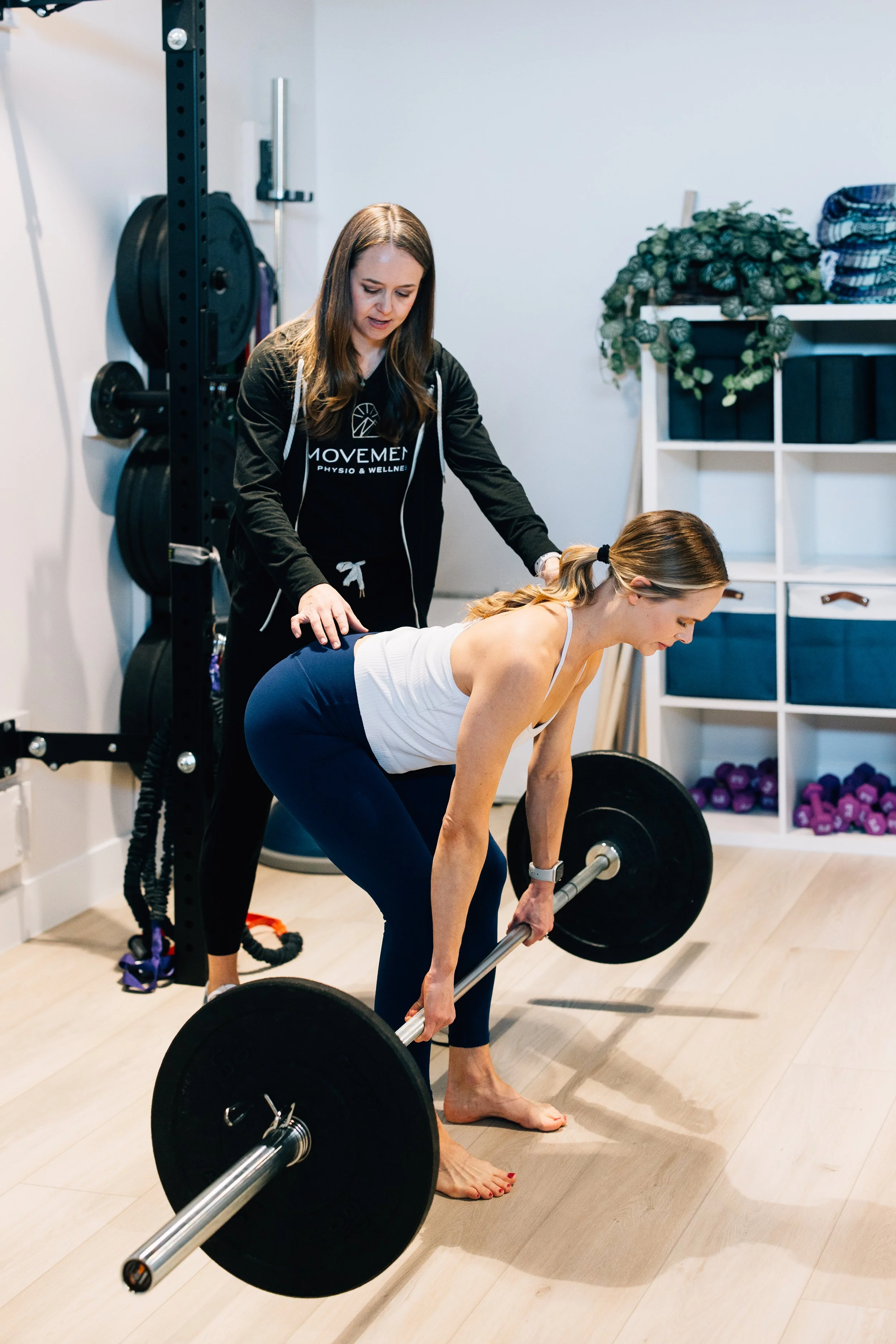
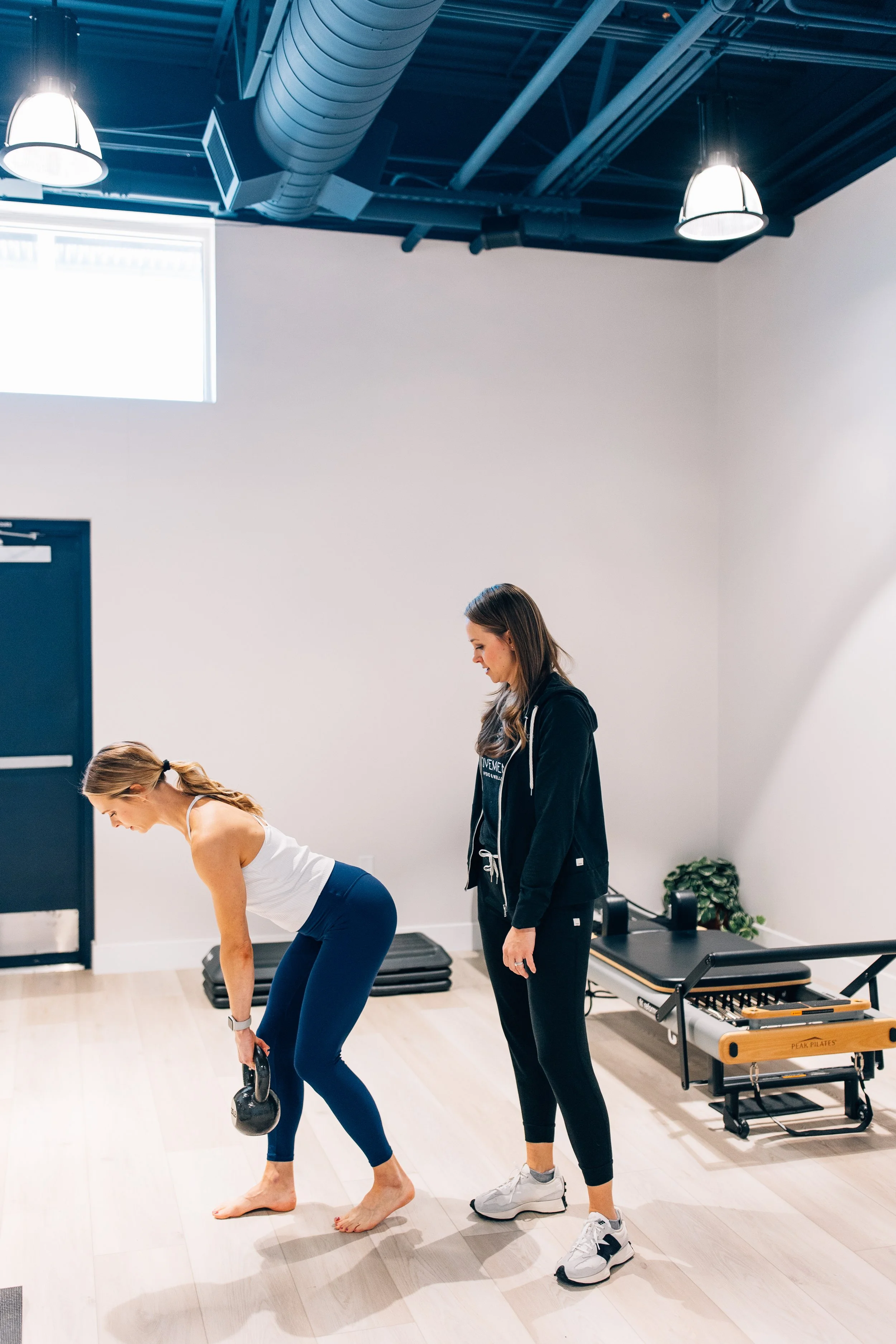
We have a proven Movement Physio and Wellness 3-Step Method to help get rid of your pelvic floor or hip issue for good. The 3-Step Method works in three phases: Elongate, Elevate, and Empower.
ELONGATE.
We need to calm down the nervous system in order to reduce your pain and length tissues that are tight. We do this by incorporating breathwork and hands-on manual therapy techniques to get your muscles to relax. (Visits 1-4)
ELEVATE.
Once the tissues are calmed down and your pain is reduced, we will work on the brain to muscle connection and re-educate the muscles to fire the correct way. (Visits 5-8)
EMPOWER.
We work on functional strengthening of the muscles to help keep you strong and prevent this problem from returning again. We make sure you have all the “tools” in your “toolbox” so you feel empowered to take care of your body so you never experience this problem again! (Visits 9-12)
What Our Patients Have to Say…
“I love this place! She is putting my pelvis back together after years of not realizing there was an issue and that this is just the way it was. I am learning a whole new way to breathe and my hip pains and arthritis are slowly disappearing and getting better and I can't think this practice enough. Thank you thank you!”
— Alexandra“I have suffered from back/hip pain and the source of the pain has not been able to be found, until now! They have been so wonderful in working with me to strengthen my body as well as given me extremely valuable education around my c-section, perimenopause, and what to expect in the future. Very grateful to have found this amazing female resource and community.”
— Katy“Movement Physio & Wellness fixed me. I went in doubtful the pain in my thigh was related to my pelvic floor, and wow was I proven wrong! Forever grateful for the team at Movement.”
— RosemaryFrequently Asked Questions
-
Pelvic floor physical therapy is a speciality physical therapy that is perfect for people who are struggling with conditions related to the pelvis or pelvic floor. Some of these common issues have to do with bladder leakage, bowel issues, or sexual dysfunction related to the muscles of the pelvic floor. We work on eliminating pain, stopping these embarrassing symptoms, and getting you back to activities and goals specific to you.
-
At Movement Physio and Wellness, we help adults struggling with bladder, bowel, and sexual dysfunction. We most typically see women during pregnancy, postpartum, or menopause. We also treat men struggling with pelvic floor problems like pelvic pain, urinary urgency, and constipation. We do not treat pediatrics but will see teenagers on a case by case basis.
-
The people that come to see us for pelvic floor therapy are often dealing with an issue related to the muscles of the pelvic floor. Most often, people struggle with bladder leakage, pelvic pain, bowel issues, and pregnancy/postpartum recovery. You can take this short 10 question quiz HERE to see if you’d be a good candidate to come in for therapy!
-
Prior to your first visit, please fill out your intake form that is emailed to you via our Jane booking system. At your first visit, you can expect to be evaluated and treated in a private room by one of our female pelvic health therapists. We look at how the body moves, especially your hips, back, core, and anything that has to do with your specific pelvic condition. With your consent, the therapists may ask to perform an internal exam to check if the pelvic floor muscles are tight, weak, or painful. Then, we come up with an expert treatment plan in order to meet your specific goals.
-
We are an out-of-network provider, which allows us to provide the highest level of one-on-one care without insurance restrictions. This means longer treatment sessions, a personalized plan designed just for you, and faster results. Many of our patients use HSA/FSA funds or submit for reimbursement through their insurance. We'd be happy to guide you through that process.
-
As pelvic floor therapists, we believe that an important part of our exam process is a pelvic floor muscle exam done via the vaginal canal or rectum. This is one way we can truly feel if the muscles are tight, weak, or painful. Deciding to perform the internal exam is a decision made by YOU and your therapist! Obviously, if you are not ready to have this exam done yet, no worries! Your therapist will explain all the options to you. We always ask for ongoing, informed consent to evaluate your body!
-
In many cases, we are a patient’s second or third pelvic floor therapist they have seen. When someone hasn’t had luck with pelvic therapy in the past, first we want to understand their experience and how they responded to treatment. We also want to understand how invested they were in their own care. We use this information and take a different approach to make sure you are given a new and improved plan to tackle these annoying pelvic pain and hip pain issues. We love collaborating with past therapists and other medical providers to make sure YOU are at the center of your care.
-
First off, we need to do a complete evaluation to know what causes and where your pelvic pain is coming from! Sometimes these are related to the pelvic floor muscles themselves when they are tight, weak, or have poor coordination. But often, we also find problems outside of the pelvis and the pelvic floor unfortunately is caught in the middle! We can determine if the pain in your pelvis is from an issue in the ribs, spine, hips, or even feet! It can be complex, but the good news is as pelvic floor therapists, we have extensive training for solving these issues.
-
In the hip and pelvic girdle, you have muscle connections from your pelvic floor all the way out to the hip socket. Sometimes pressing on this deep pelvic floor muscle can reproduce pain in the hips! Because of all the interconnections in the pelvis and hip region, it is important to screen the hip and pelvis together when you have any pain in the hip and pelvis area.
-
Yes! As pelvic floor physical therapists, we are experts at treating any issue that involves the pelvis and hip. And guess what… the hip is connected to the pelvis and there are so many ways we can address treating the pelvis and hip together as one!
-
The human body is made to MOVE and sometimes we can have pain that is related to how the body is moving, not just the structure of the hip joint. Our nervous system (brain and nerves) control how these muscles and joints move. When there is an issue with the nervous system, it can be “sensitive” and respond to pain at a lower threshold than normal. Our job as pelvic floor physical therapists is to find the root cause of your pain, and it might be something that is not easily seen on an MRI picture.